
'/%3E%3C/svg%3E)






How to Scale Your B2B Business: Workflow Automation Examples
Manual work acts as a brake on every part of B2B sales, slowing everything from quoting to final fulfillment. While many companies view automation as a complex IT project, it is actually a critical growth lever.
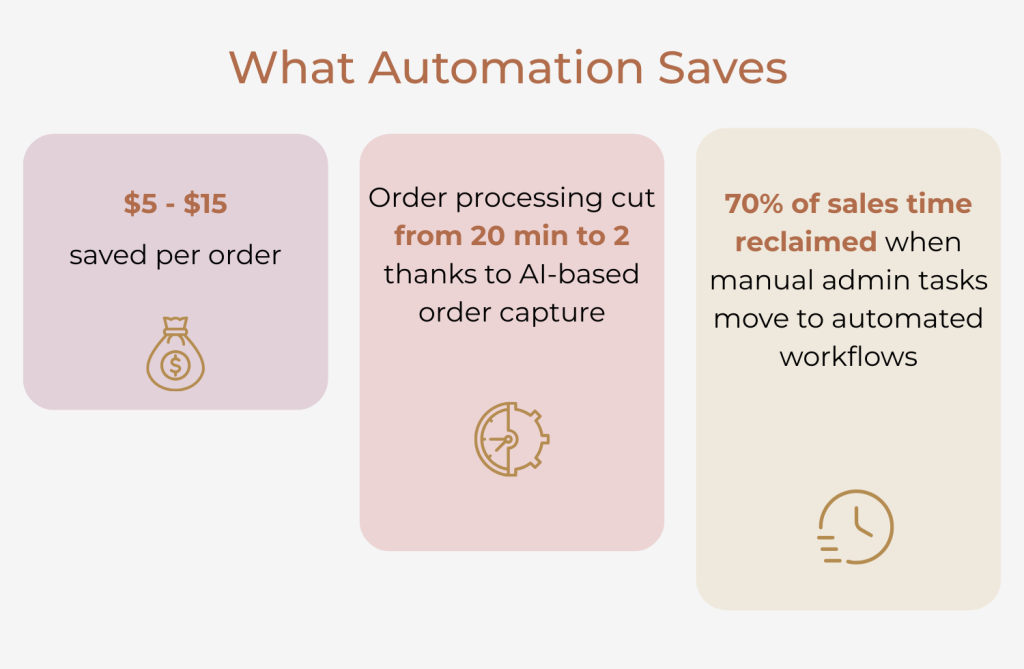
The data on inefficiency is clear: sales representatives currently spend only 36% of their time actually selling. The rest is lost to administrative tasks like pricing checks and coordination. This inefficiency has a real cost:
- Manual Orders: Cost ~$7 per transaction to process via paper or email.
- Digital Workflows: Cost $2–$6 per transaction.
- The Bottom Line: Automation recovers $5–$15 per order and reclaims up to 70% of sales time.
Once sales and order workflows move to autopilot, the results materialize almost immediately:
- Faster Deals: Sales cycles shrink from weeks down to days.
- Cleaner Operations: Pricing disputes and product returns are drastically reduced.
- Higher Output: Reps process significantly more orders without the need to add headcount.
- Scalability: For manufacturers and distributors dealing with high volume and complexity, these efficiency gains quickly scale into cleaner execution and real revenue.
Below are high-impact workflow automation ideas to eliminate bottlenecks across your entire organization.
Automating Sales Workflows
Goal: Reduce sales cycles from weeks to days and eliminate pricing disputes.
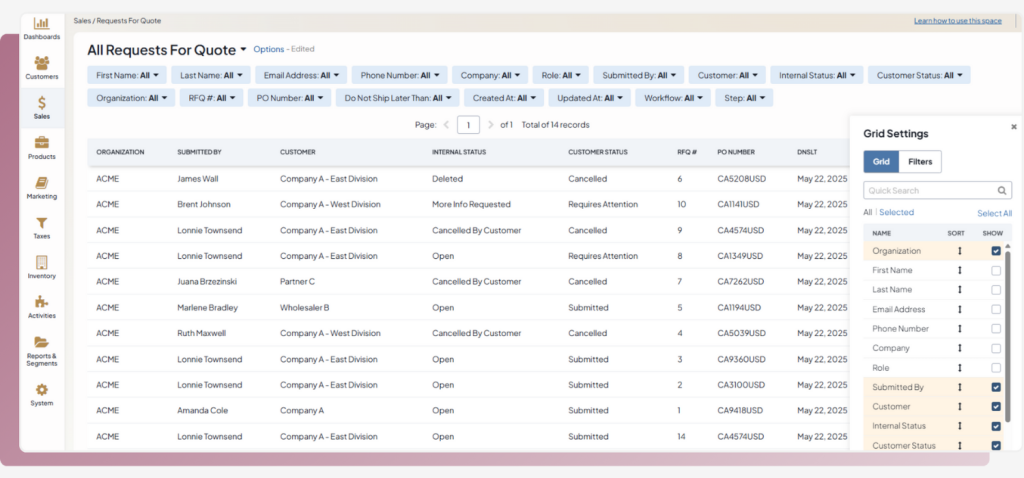
Centralized RFQ Management
Requests for Quotes (RFQs) often get lost in shared inboxes. Automation converts every online RFQ into a tracked record with an assigned owner and response timer. This ensures no request is missed and managers have a clear view of who is responsible for each lead.
Smart Approval Routing
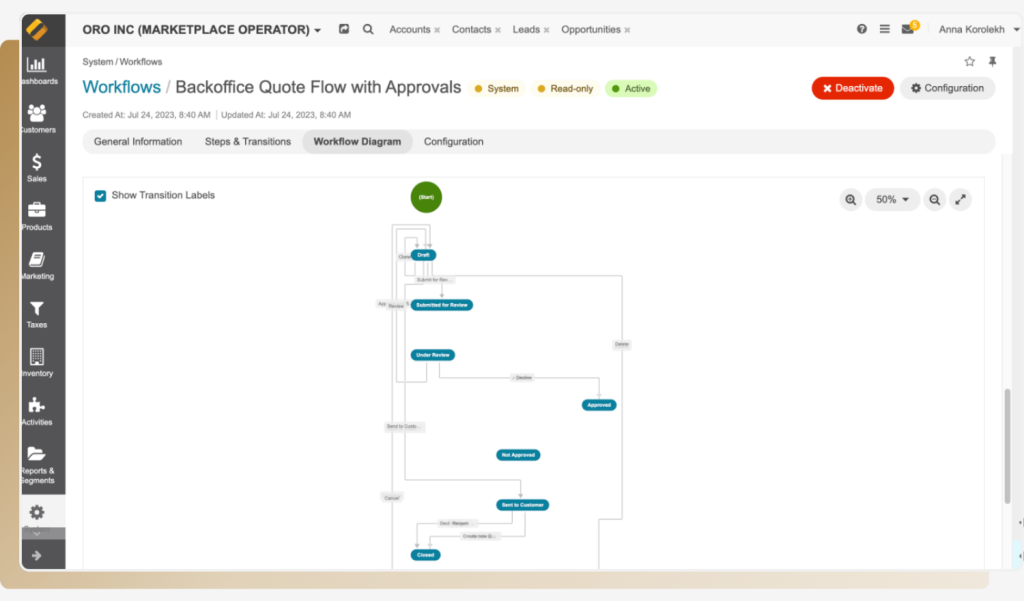
Approvals shouldn’t sit in email inboxes. A workflow engine can automatically route requests based on logic you define: large discounts go to a manager, high-value quotes trigger a finance check, and standard quotes move straight to the customer. This allows approvals to finish in hours rather than days.
Seamless Quote-to-Order Conversion
When a customer accepts a quote, manual re-entry into the ERP creates errors. Automation instantly converts an accepted quote into an order, preserving verified pricing, terms, and product data without double-handling.
Buyer-Side Approval Chains
Corporate buyers often have their own internal spending limits. A strong B2B platform allows buyers to manage this themselves, automatically routing orders above a certain threshold to their own internal managers for approval. This relieves sellers from managing buyer politics.
Automated Contract Pricing
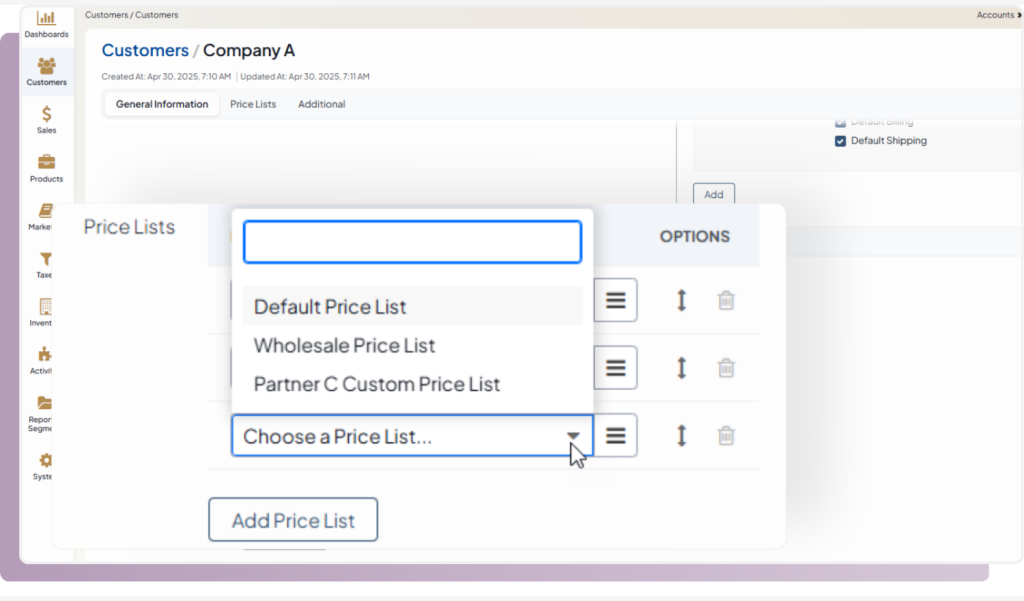
Enforcing negotiated pricing manually is difficult. Automation links specific price lists and contracts to customer accounts, ensuring they always see their agreed-upon rates when they log in.
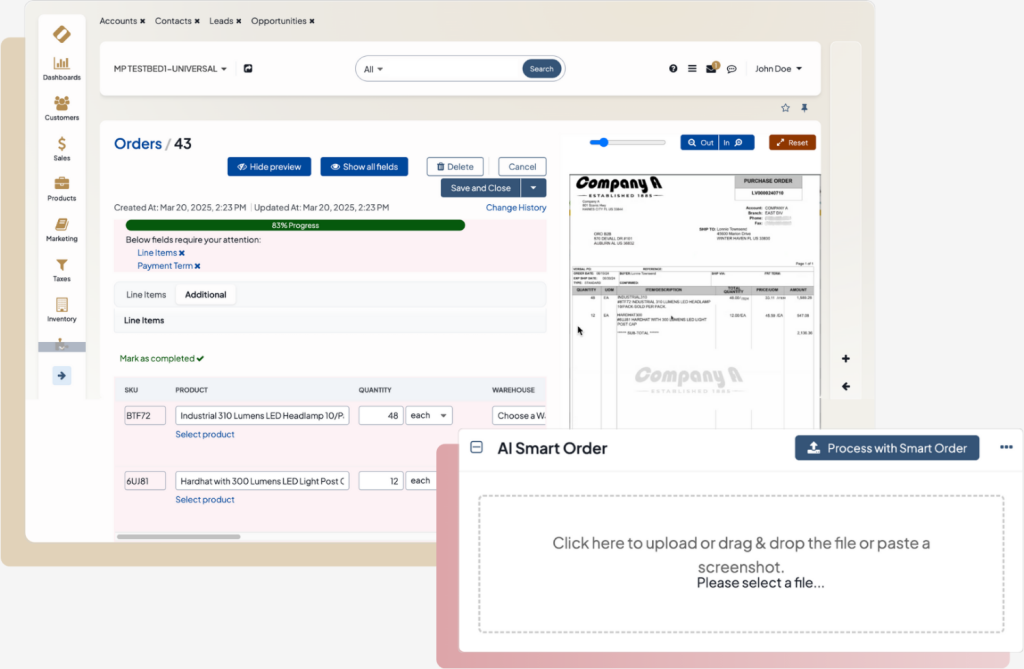
AI-Powered Order Capture (Offline Orders)
Many B2B buyers still send PDF purchase orders. Instead of rekeying these, AI tools (like SmartOrder) can parse the file, map the SKUs, and create a draft order automatically. This can cut processing time from 20 minutes to just two.
Operations and Fulfillment Automation
Goal: Connect sales to the warehouse to ensure fast, accurate delivery.
Zero-Entry Order Processing
Consolidating orders from all channels into one workflow eliminates manual entry. Orders flow directly to the ERP or Warehouse Management System (WMS) with line items and shipping details intact.
See B2B eCommerce Workflows in Action
Real-Time Inventory Sync
Trust is lost when a customer orders an item that is actually out of stock. Automation syncs inventory counts across warehouses and storefronts instantly as orders are placed.
Smart Stock Allocation
If a primary warehouse is out of stock, workflow rules can automatically redirect fulfillment to the next nearest location. This ensures the buyer sees accurate availability without manual intervention from operations.
Automated Shipping Updates
Customers shouldn’t have to call to ask “Where is my order?”. Integrations with carrier systems allow tracking numbers and delivery status to update automatically in the buyer’s account.
Streamlined Returns (RMA)
Returns are often chaotic. An automated RMA workflow allows customers to request returns online. The system checks if approval is needed, issues an RMA number, and notifies the warehouse—creating data that helps operations fix upstream issues.
Auto-Generated Compliance Documents
For manufacturers of technical or regulated goods, automation can ensure the correct safety data sheets, certifications, or spec sheets are automatically pulled and attached to the shipment based on product attributes.
Finance and Compliance Automation
Goal: Ensure accuracy in pricing, credit, and taxes without manual oversight.
Dynamic Credit Control
Manual credit checks stall orders. Automated workflows can review credit exposure instantly. If an order exceeds a limit, it is automatically placed on hold and the finance team is notified; if it is within limits, it flows through immediately.
Real-Time Payment Status
Just as with credit, payment updates should be automatic. When a deposit is confirmed or an invoice cleared, the order status should update across all systems instantly.
Customer Budget Enforcement
Large customers often run on strict budgets. Your platform can enforce these caps before an order reaches your finance team, preventing after-the-fact disputes.
Tax and Regulatory Validation
Tasks like tax exemption validation or export controls are time-consuming. Automation runs these checks in the background, flagging missing data before fulfillment to ensure audit-ready consistency.
Transparent Audit Trails
Every automated action leaves a traceable digital footprint. Quotes, discounts, and credit decisions are automatically stamped with user history and timestamps. This satisfies auditors and prevents internal confusion; when disputes arise, finance teams don’t have to guess what went wrong—they can simply look at the record.
What to Look for in a B2B Automation Platform
Not all eCommerce platforms can handle this complexity. To achieve these results, you need a system built for B2B logic, not just a storefront.
| Capability | Why It Matters for B2B Sellers |
|---|---|
| Built-in Workflow Engine | Allows you to configure rules and routing without custom code. Sales ops should be able to adjust logic without IT help. |
| B2B Data Model | The system must understand account hierarchies, corporate budgets, and buyer roles by default. |
| Deep Integrations | Data must flow to ERP, CRM, and WMS natively or via API without file uploads. |
| Audit Trails | Every automated action (discount, approval, credit release) must be logged with timestamps for transparency. |
Conclusion: From Efficiency to Acceleration
B2B eCommerce workflow automation usually starts as a cost-saving measure, but it ultimately becomes a tool for alignment. When sales, operations, and finance work from a single, automated version of the truth, quotes don’t go missing and orders flow smoothly. This reliability is what ultimately shrinks sales cycles and builds trust at scale.
Frequently Asked Questions
It is the use of automated processes and technology to streamline and optimize steps involved in B2B eCommerce, such as order processing, inventory management, and shipping, to improve efficiency and reduce errors.
It allows for automated quoting based on predefined rules, automated approval workflows for managers, and the application of complex pricing rules specific to customer history or volume.
Common challenges include integrating with legacy systems, ensuring data accuracy across platforms, managing complex pricing structures, and handling change management for employees used to manual processes.