
'/%3E%3C/svg%3E)






Why ERP Alone Cannot Support Modern B2B Commerce
For B2B organizations, the Enterprise Resource Planning (ERP) system has long played a vital role in operations. As the central system of record for finance, inventory, and supply chain management, it provides the foundation of stability and data integrity that businesses depend on.
However, the B2B commerce industry is witnessing significant changes. Notably, the expectations of business buyers are increasingly shaped by their experiences as consumers. Intuitive, personalized, and seamless digital interactions are in demand. Conversely, this shifting context has exposed a major strategic challenge for ERPs: while they are well-suited to managing internal processes, they were never intended to be customer-facing engines for digital growth.
Relying solely on an ERP to power a modern B2B commerce experience can cause friction and ultimately limit business potentials. For IT leaders, recognizing the primary ERP limitations in this context and formulating a more sustainable architectural approach will be crucial in order to adapt to the rapidly changing landscape and demands of digital commerce.
The Core Challenge: An Internal Tool for an External Audience
In discussing ERP’s limitations, the most obvious problem stems from its core purpose: it is an inwardly focused system designed for efficiency and control by trained, internal users. Conversely, modern B2B commerce is outwardly focused, designed for customer engagement, acquisition, and self-service.
When businesses stretch an ERP to take on the role of customer engagement, they arrive at an unintuitive platform that feels more like an internal system with a login rather than something specialized for real commerce. The characteristics of this pitfall can include:
- Navigation following internal logic: The interface mirrors internal product codes and back-office hierarchies that are meaningless to an external buyer.
- Workflows mirroring internal forms: The checkout and quote request processes are a field-by-field replication of the ERP’s internal order-entry forms, forcing customer behavior to conform to back-office procedures.
- Business rules exposed without context: Complex pricing, shipping logic, and compliance rules held within the ERP show up in ways customers do not understand, leading to confusion and support requests.
Such a platform results in a system that facilitates transactions without learning. In other words, it only captures a successfully placed order, not the crucial behavioral data that tells businesses the journey of the user. Details like where potential buyers abandon their carts, what customers are searching for but failing to find, or which accounts struggle with the interface and ultimately revert to placing orders via email are ultimately not collected, creating potentially costly strategic limitations.
When businesses have access to this information, they can rely on them to make informed, timely adjustments like optimizing the customer journey, refining product catalogs, and providing actionable signals to sales teams. By doing so, businesses maintain the flexibility and innovative edge needed in a hyper-competitive market.
If your digital front-end merely acts as a window into the ERP, you see the orders that were booked, but you remain blind to the revenue you never captured.
Beyond Interface: ERP’s Structural Limitations for B2B Commerce
The challenges extend beyond user engagement, towards ERP’s very structural disadvantages. The world of digital commerce is fast-moving, content-driven and always online. Each of these aspects illustrates ERP’s limitations:
1. Monolithic and Rigid Architecture: ERP’s rigid systems are difficult and expensive to customize. The slow, high-risk nature of ERP customization inhibits businesses’ ability to quickly respond to market changes like launching new promotions, testing pricing models or integrating with new sales channels. Businesses risk losing their flexibility and proactivity.
2. Poor Handling of Rich Product and Marketing Content: Modern B2B commerce is driven by rich, unstructured content ranging from detailed product specifications and tutorials to high-resolution images. By contrast, ERP systems are optimized for structured, transactional data like SKUs and inventory levels. As they lack the native Product Information Management (PIM) and Content Management System (CMS) capabilities, they are unable to deliver the robust, compelling content that buyers have come to expect.
3. Scalability and Performance Bottlenecks: ERPs are intended for a predictable number of internal users during normal business hours. On the other hand, a public-facing e-commerce website is expected to handle unpredictable traffic spikes and be available 24/7. When an ERP is exposed to this erratic web traffic, it can lead to severe performance degradation that negatively impacts both the e-commerce site and critical internal business operations that depend on the same ERP.
The Path Forward: A Composable, Best-of-Breed Architecture
The solution is not to replace the ERP. Its function as the system of record remains indispensable. It is to augment it.
An ideal, future-proof approach is a composable architecture in which a dedicated B2B commerce platform serves as the customer-facing engagement layer. The front-end platform is designed specifically for user experience, content management, and scalability. It then integrates with the ERP via APIs, pulling necessary data like pricing and inventory while keeping the core ERP system secure and stable.
By clearly separating the roles between the two systems, each can focus on doing what it does best:
- The ERP continues to be the reliable back-office backbone.
- The B2B Commerce Platform provides the agile, customer-centric experience needed to compete and grow.
Businesses gain an architecture that offers the best of both worlds: it allows the ERP to continue its mission-critical work in a stable environment, while the commerce platform enables businesses to innovate at the speed modern commerce demands.
The success of this approach can be clearly seen in the following two case studies.
Case Study 1: Dual Structure for Growth in the Agricultural Sector
The experience of ICL, a multinational agricultural manufacturer with presence in over 20 markets, shows the need for an architectural shift. While the core business was stable, supported by multiple ERP systems, challenges emerged in their customer-facing processes: orders still arrived via phone and email, data had to be manually entered, and customers lacked a self-service interface to view their pricing, inventory, or order histories.
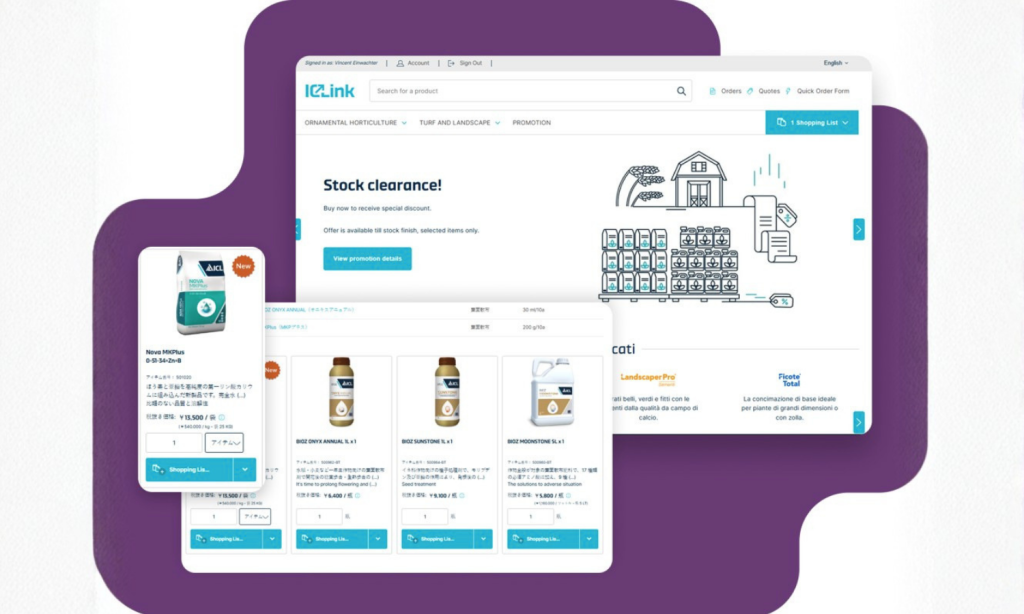
Operational bottlenecks for the company, inadequate experiences for its customers.
ICL’s solution was not to replace their core ERPs. Instead, the company invested in and implemented a dedicated customer-facing commerce platform on top of their existing systems. This provided their network of dealers with a single, unified portal to manage their entire relationship, from viewing contract-specific pricing and availability to placing and tracking orders.
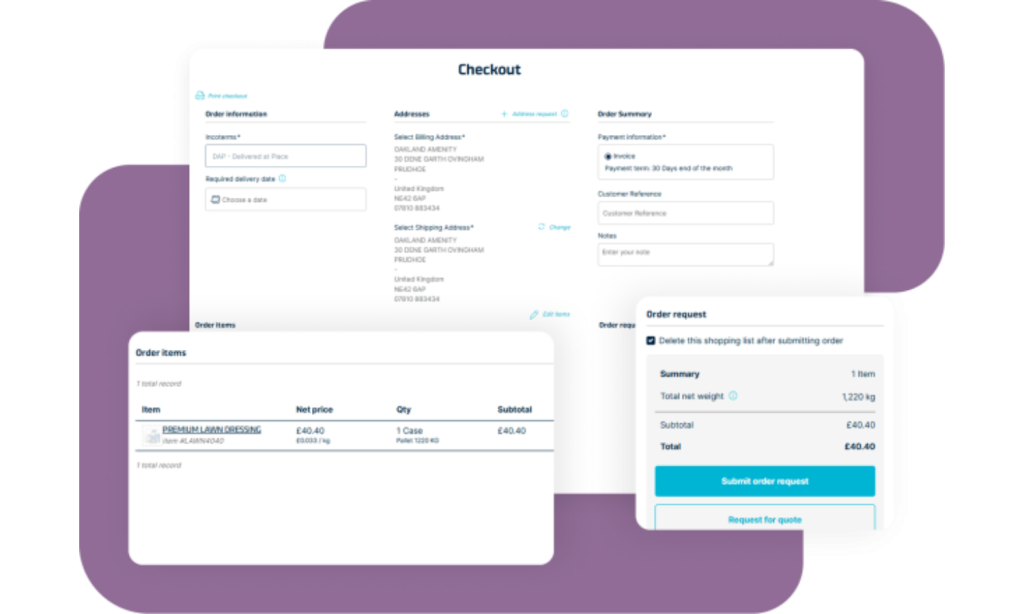
By doing so, the manufacturer was able to transition a significant portion of their customer base to a self-service digital channel. The customer experience became more optimized and empowering, while internal teams can move away from routine data entry to focus on higher-value activities. The core ERPs continued working as intended, while the new commerce layer successfully transformed customer interactions with the business.
Case Study 2: Strategic Shift for Reducing Costs, Upgrading Engagements
Transitioning to an architecture composed of best-of-breed systems also helps avoid costly but ineffective investments.
One leading HVAC manufacturing company faced the dilemma of providing a satisfactory customer experience, using twelve ERPs that were collected from previous acquisitions. An initial option was to continue pouring resources into consolidating these ERPs, but this did not solve the fundamental issue: the lack of a unified interface for orders, service, and documents.
The company found another solution. Instead of relying exclusively on ERPs, they implemented a single dedicated customer portal that would utilize data from the core ERP and PIM, while handling all the public-facing functions.
The concrete benefits of this transformation are twofold. Internal teams’ workflow were enhanced thanks to a unified data account for services and sales, as well as an automated process that lets customers view their order updates straight from the ERP. Customers gained an all-in-one platform for tasks ranging from placing orders to pulling invoices. The process for tracking warranty claims also became more accessible and intuitive, supporting customers and business alike in resolving product issues.
Both cases illustrate how an architectural rethinking can produce visible economical and productivity benefits. More than that, however, the client-business relationship can be deepened as customer transactions and business operations are enhanced through a dedicated engagement layer on top of the ERP backbone.
Key Takeaways: Building a True B2B Commerce-Native Front-End with OroCommerce
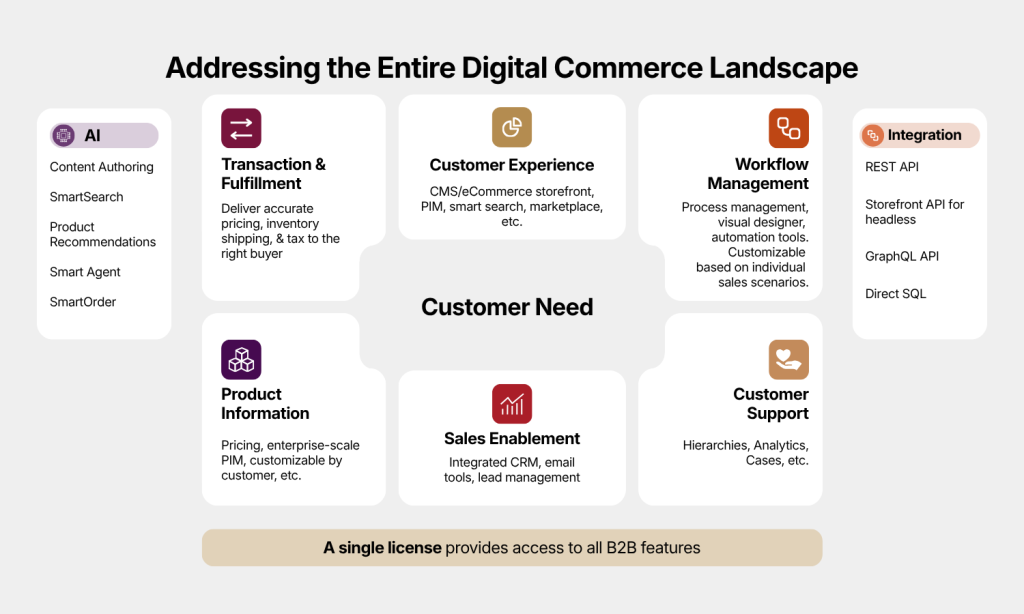
Many organizations find that their digital commerce initiatives fail to gain traction despite a stable ERP system and reliable data. This is because a gap often exists between the ERP’s back-office logic and the complex realities of the B2B buying journey.
This gap cannot be solved simply by adding a basic user interface on top of the ERP. Instead, it requires investing in a dedicated front-end platform architected specifically for the complexities of B2B commerce. This platform would provide the capabilities that ERPs lack, enabling businesses to:
- Model Complex Organizational Structures: Natively manage the intricate relationships between parent companies, subsidiaries, dealers, and multiple user roles within a single customer account.
- Deliver Personalized Commerce Experiences: Utilize data from the ERP to run rich, segmented product catalogs and apply role-aware pricing and content automatically.
- Enable Agile Workflow Management: Design and modify quoting, approval, and reordering workflows within the commerce layer, without requiring high-risk changes to the core ERP system.
- Capture Actionable Behavioral Data: Track user interactions, including failed searches and abandoned journeys, to provide valuable signals about customer friction and emerging demand.
As the dedicated customer-facing engine, OroCommerce can provide businesses with these capabilities, while supporting the clear division of roles needed to allow both the front-end and ERP back-end to excel at their intended functions. This customer engagement platform further records behavioral data, allowing businesses to make informed adjustments and create real growth.
In addition, OroCommerce offers a unified platform to handle B2B commerce’s various demands. On the same platform, businesses can operate different services like storefronts, marketplaces, and customer portals to match business needs, while gaining access to CRM-style account views to keep track of customer engagements and track important analytics.
Lastly, AI-powered features like AI SmartOrder and AI SmartAgent manage the scale and service, enhancing business and customer experiences alike. Through a strategic architectural shift supported by OroCommerce, every step of B2B commerce is effectively addressed with one single, comprehensive e-commerce platform.
For IT Directors and Solution Architects, the path forward begins with a strategic audit of their current commerce architecture. The first step is to ask: Does our digital platform force customers to conform to our internal processes, or does it conform to their needs? Is it able to respond to new demands and changes, or is it an obstacle to doing so?
Answering these questions forms the starting point for designing a technology stack that is truly resilient, scalable, and built for digital growth.