




Preventing Customer Experience Disruptions During M&A
The most visible risks in post-merger integration (PMI) in manufacturing and distribution are already well-documented: system downtime, network security, payroll continuity. What receives less attention until it becomes a revenue problem is the customer experience fracture that occurs when disparate commerce infrastructures remain unaddressed.
According to McKinsey, B2B buyers now route one-third of total spend through digital self-service channels, including transactions exceeding $500,000. At the same time,45 percent express dissatisfaction with supplier digital experiences, driven primarily by ordering inefficiency and insufficient visibility. Unless properly managed, post-merger integration compounds these baseline challenges.
This article explores how customer experience can be negatively impacted during PMI, and how a strategy based on workflow unification effectively addresses this by spotlighting two case studies of organizations able to preserve customer relationships throughout the process. We’ll also provide insight into how organizations can manage PMI from start to finish, what to consider when choosing the right e-commerce platform, and how one can quantify the financial costs of CX fragmentation to argue for a unified workflow approach.
The PMI CX Problem: When Buyers See the Seams
The post-merger integration process can multiply existing complications by creating a predictable customer experience failure pattern. Acquired entities come with independent ERPs, custom portals, and incompatible data structures. The typical IT response is to first maintain parallel systems while focusing on financial consolidation. Customer-facing systems receive attention only after complaints escalate or revenue impact becomes measurable.
For buyers who previously worked with a single brand, they now face several new complications:
- Multiple login credentials,
- Inconsistent pricing displays,
- Fragmented order histories
- Shipping notifications from different domains.
For procurement teams managing spend across what is now technically one supplier, the experience suggests they are still managing multiple vendor relationships. In this way, preserving PMI CX is a defensive requirement, rather than an enhancement initiative.
Workflow Unification as Integration Strategy
Organizations that are able to maintain customer relationships through integration largely share one specific architectural approach: a unified commerce layer that abstracts backend complexity from the buyer experience.
Unlike trying to consolidate ERPs before addressing customer touchpoints, this strategy aims to create a single interaction model for all customer-initiated processes, regardless of which legacy system ultimately fulfills the transaction.
This approach delivers three immediate stabilization benefits during the critical first 90 days post-close:
- Customers receive unified credentials through single sign-on implementation, eliminating the most visible integration friction point.
- Legacy URLs redirect to consolidated experiences, preventing support volume spikes.
- Customer service and sales teams operate from shared knowledge bases with consistent process documentation, enabling coherent responses regardless of which entity originally managed the account.
On the end-user side, the customer perceives one company with one set of business rules. IT manages the complexity of routing those interactions to appropriate backend systems based on logic the customer never sees.
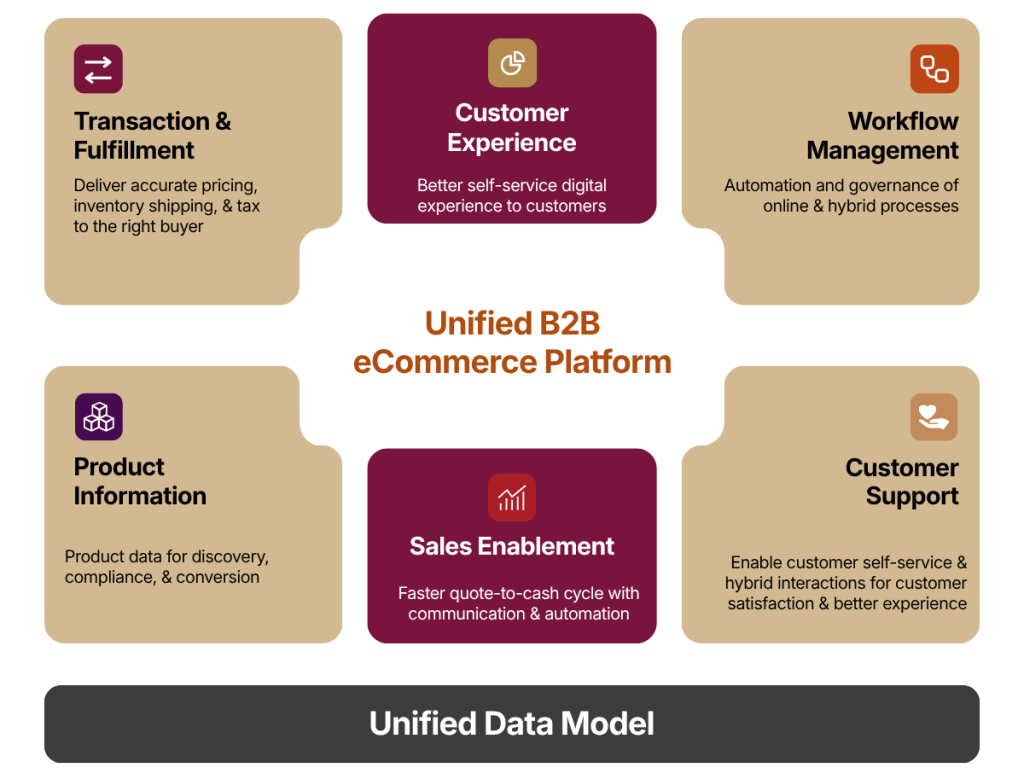
The following two case studies demonstrate the value of an approach based on workflow unification.
DiversiTech: Managing Twelve ERPs Without Forcing Consolidation
DiversiTech’s post-integration environment illustrates the practical application of workflow unification in a highly fragmented technical landscape.
As a major North American HVAC components manufacturer built through acquisition, the organization held twelve independent ERP systems, each supporting distinct business units with established customer relationships.
The pre-consolidation customer experience reflected this fragmentation directly in two notable ways:
- Buyers purchasing across product lines managed separate accounts for each business unit.
- Order visibility ended at the point of placement; tracking a shipment or accessing a packing slip required contacting the appropriate sales representative and waiting for manual lookup.
Rather than attempting ERP rationalization as a prerequisite for CX improvement, DiversiTech teamed up with OroCommerce to implement a unified commerce layer that connected to all twelve systems. This platform became the customer-facing system of record for order intake and account management, while financial and inventory truth remained distributed across the ERPs.
For customers, the login experience collapsed from potentially twelve sets of credentials to one. Order history consolidated across all business units into a single dashboard. Documents previously requiring rep assistance (packing slips, invoices, warranty certificates, tracking information) became self-service retrievals. The perception shifted from buying from twelve suppliers to buying from one company with broad capabilities.
Lactalis: Standardizing Without Eliminating Regional Flexibility
Lactalis, operating as a multinational dairy organization built through decades of acquisition across multiple countries, faced the dilemma of preserving local market responsiveness while achieving enterprise-scale efficiency. Each region it expanded to came with independent business processes, sales models, and technology stacks ranging from modern to obsolete. Any new digital initiative is obstructed by speed and resource requirements, not to mention custom builds and manual fixes for every individual region.
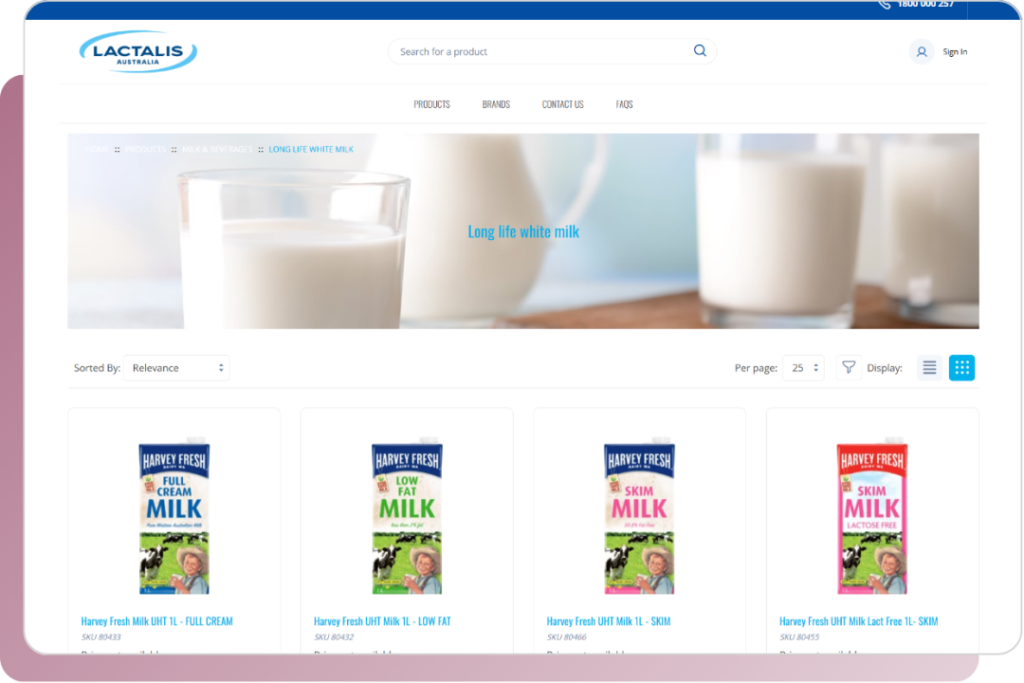
The workflow unification strategy addressed this tension by standardizing the platform architecture while parameterizing business logic. Core workflows for product data management, customer account structure, order intake, and system integration followed consistent patterns across all deployments. Regional variations in tax calculation, pricing rules, and compliance documentation requirements were configured rather than custom-coded.
The results speak for themselves. Deployment time for new market entry decreased by more than half, significantly cutting down what had been multi-year implementation projects. Manual data entry declined 44% as workflow automation replaced region-specific workarounds. In markets where distribution had previously been the only option, this standardized foundation now allows direct-to-customer sales channel launches.
Practical Tips for Workflow Unification
Implementation Timeline for PMI CX Preservation
To successfully maintain customer experience quality through post-merger integration, many organizations adhere to a consistent implementation sequence that prioritizes buyer-facing stability while managing technical complexity in phases.
- Pre-Close: Digital Due Diligence. PMI CX preservation begins during the deal evaluation phase. Effective due diligence maps every customer interaction point: web portals, ordering systems, pricing tools, account management interfaces. The assessment identifies which systems are customer-critical versus operationally convenient, where manual processes mask system gaps, and which integration points present the highest fragility risk.
- First 90 Days: CX-Oriented Stabilization. Single sign-on deployment eliminates credential fragmentation. URL redirection ensures customers using saved links reach the correct destination without encountering dead links. Consolidated knowledge bases give customer service and sales teams unified process documentation, enabling consistent answers regardless of which team member receives the call.
- Months 3-12: Unified Platform Deployment. Platform selection for B2B organizations must support complex account hierarchies with multi-level approval workflows, contract-specific pricing, and integrations with multiple ERP systems. Data hygiene also becomes non-negotiable before migration, as existing issues can be carried into the new platform through duplicate records in product catalogs and inconsistent account hierarchies in customer databases.
- Months 12-36: Legacy System Retirement. Systems are decommissioned only after usage data confirms customers have migrated to the new platform. Cost savings from consolidation become visible as duplicate software licenses terminate, support contracts end, and IT resources shift from maintenance to development work.
Validating Vendor Claims: Architecture Over Marketing
Many commerce platforms for PMI CX initiatives are typically marketed as having “unified” and “all-in-one” capabilities. Distinguishing architecturally unified platforms from bundled point solutions requires technical validation beyond feature checklists.
- Single Data Model: An architecturally unified platform maintains one data model accessed by one codebase operating against one database for core commerce entities. A contract price change occurs once in one location and immediately reflects in all customer-facing displays. Platforms that achieve unification through acquisition of multiple companies frequently fail this test.
- Native Account Hierarchy: B2B buyer organizations have complex structures. A platform built for this environment provides access control lists capable of replicating these hierarchies digitally. This enables customers to manage their own users, adjusting roles and spending thresholds without IT involvement, while maintaining audit trails.
- Multi-Entity Management: For organizations managing multiple brands or acquired entities, the platform must support multi-entity operations natively. This means managing global data centrally while isolating local data to specific business units. New entity onboarding shifts from a custom development project to a configuration exercise.
Quantifying the Cost of Fragmentation
Gaining executive approval for PMI CX investment requires translating technical architecture problems into financial impact metrics. A framework provided by the Gartner PAID Model (Plan, Address, Ignore, Delay) allows for thorough assessment, by mapping technical debt against business risk and remediation cost.
McKinsey data highlights how maintenance activities consume approximately 40% of IT budgets. For organizations operating fragmented post-merger stacks, this percentage trends higher as integration complexity compounds. Components that score high on both business impact and risk represent the priority consolidation targets.
Final Consideration: Navigating the Post-Merger Landscape with Workflow Unification
Organizations can choose to preserve fragmented infrastructure, accepting the operational cost and customer experience degradation as permanent conditions. Alternatively, they can treat integration as the forcing function for architectural consolidation.
The organizations that extract value from M&A activity demonstrate consistent patterns. They recognize that customer experience fragmentation translates directly to revenue risk. They invest in workflow unification before attempting full ERP consolidation. They select platforms architected for B2B complexity rather than adapting consumer tools.
Most critically, they measure success not only through cost reduction metrics but through several indicators: digital channel adoption rates, average order values, customer retention during integration, and time-to-productivity for newly acquired customer relationships. PMI CX preservation’s purpose goes beyond being a post-integration cleanup activity; it is a strategic integration workstream that determines whether the deal creates or destroys customer value.
Maintaining your customer experience through post-merger integration requires a clear, strategic vision. Book a consultation with us at contact@ekino.vn to see which approach is best for your organization.
The latest version of OroCommerce is here. To try a demo of the new OroCommerce 7.0, please contact us via contact@ekino.vn